Ticks in Fall: Why Prevention Still Matters for Dogs in Richmond, BC
Cooler weather doesn't mean tick season is over. Here's why fall tick checks matter, how to prevent bites, and what to watch for after walks in Richmond and the Lower Mainland.
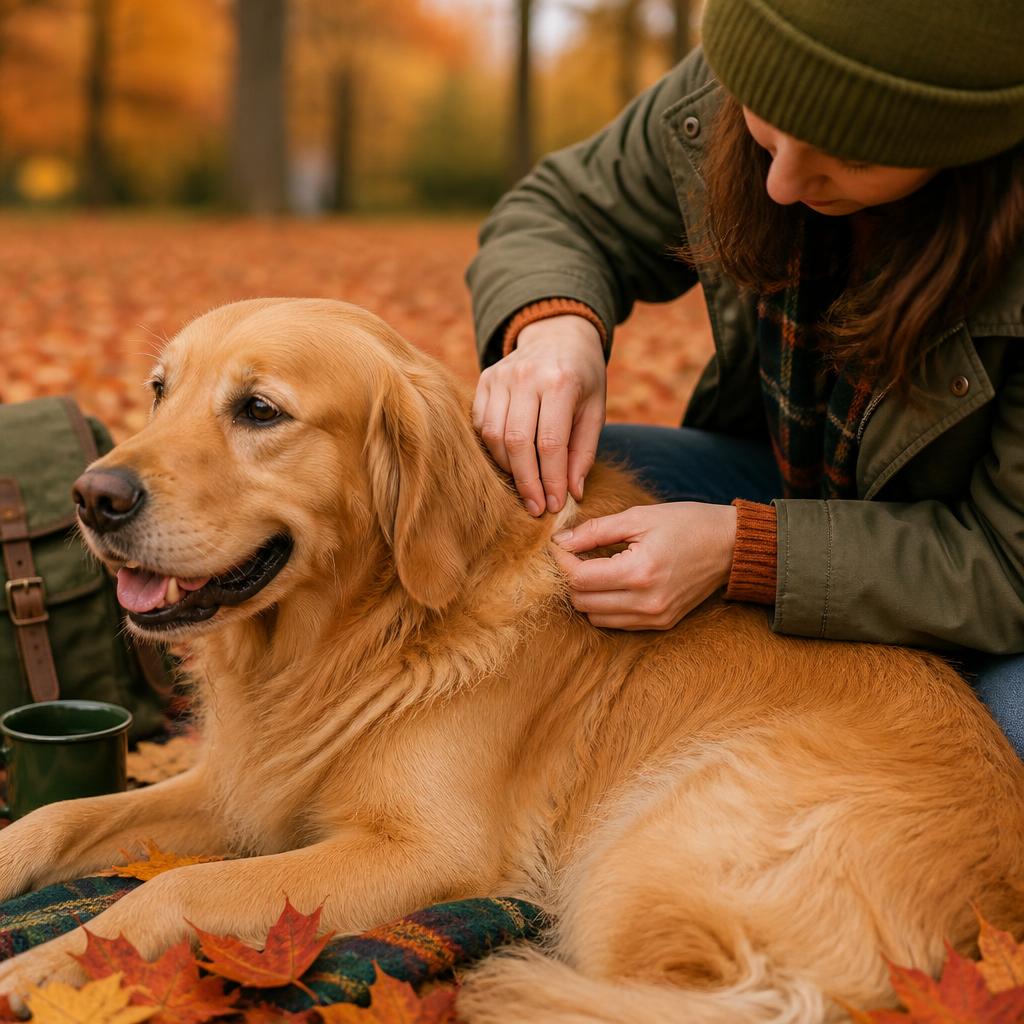
Why fall is not tick-free
Many dog owners relax parasite prevention once summer ends, but ticks are often most active in early fall — especially in wooded trails, tall grass, and leaf litter around Richmond, Delta, and the Fraser Valley. In British Columbia, the black-legged tick (also called the deer tick) is the species most linked to tick-borne illness. Dogs that hike, camp, or walk off-leash in brushy areas are at higher risk, but ticks can also be picked up in local parks and backyards.
Prevention habits that actually work
A few consistent habits go a long way toward keeping ticks off your dog and out of your home.
- Use a veterinarian-recommended tick preventive year-round
- Check your dog thoroughly after walks in tall grass, trails, or wooded areas
- Keep your yard tidy: rake leaves, trim tall grass, and clear brush where ticks hide
- Avoid letting your dog wander through dense undergrowth on walks
Where to check your dog after a walk
Ticks like warm, hidden areas. After any outdoor adventure, run your hands over your dog's entire body, feeling for small bumps. Pay extra attention to these common hiding spots.
- Around the ears and inside ear flaps
- Under the collar and around the neck
- Between the toes and on the paw pads
- Around the groin, armpits, and base of the tail
- Under the tail and around the anus
If you find a tick, save it for identification
If you discover a tick on your dog, remove it carefully and place it in a sealed container or bag. You can store it in the freezer for at least 30 days, or preserve it in rubbing alcohol, in case your veterinarian wants it identified or tested later. Write down the date you found it, where on your dog's body it was attached, and where you were outdoors at the time.
For pets and animals in British Columbia, tick identification and testing is handled through the BCCDC lab, but the submission must be made through a veterinary clinic rather than directly by a pet owner. Your vet can advise whether testing is needed and take care of the submission for you.
The Walks 'N' Wags Pet First Aid course covers tick removal tools, the correct technique for removing a tick, and the signs and symptoms to monitor after a bite.
Signs and symptoms to watch for
Not every tick bite leads to illness, but the symptoms below are worth a prompt call to your vet. Early treatment is often simpler and more effective.
- Unusual lethargy, weakness, or loss of appetite
- Fever or swollen lymph nodes
- Lameness that shifts from one leg to another
- A rash or redness around the bite site that spreads or worsens
- Vomiting, diarrhea, or signs of pain
Know what to do before you need to do it
Reading about ticks is a great first step, but a certified Walks 'N' Wags Pet First Aid course teaches you the right tools and techniques for tick removal, plus the signs and symptoms to watch for after a bite — so you're not figuring it out for the first time in a stressful moment.